



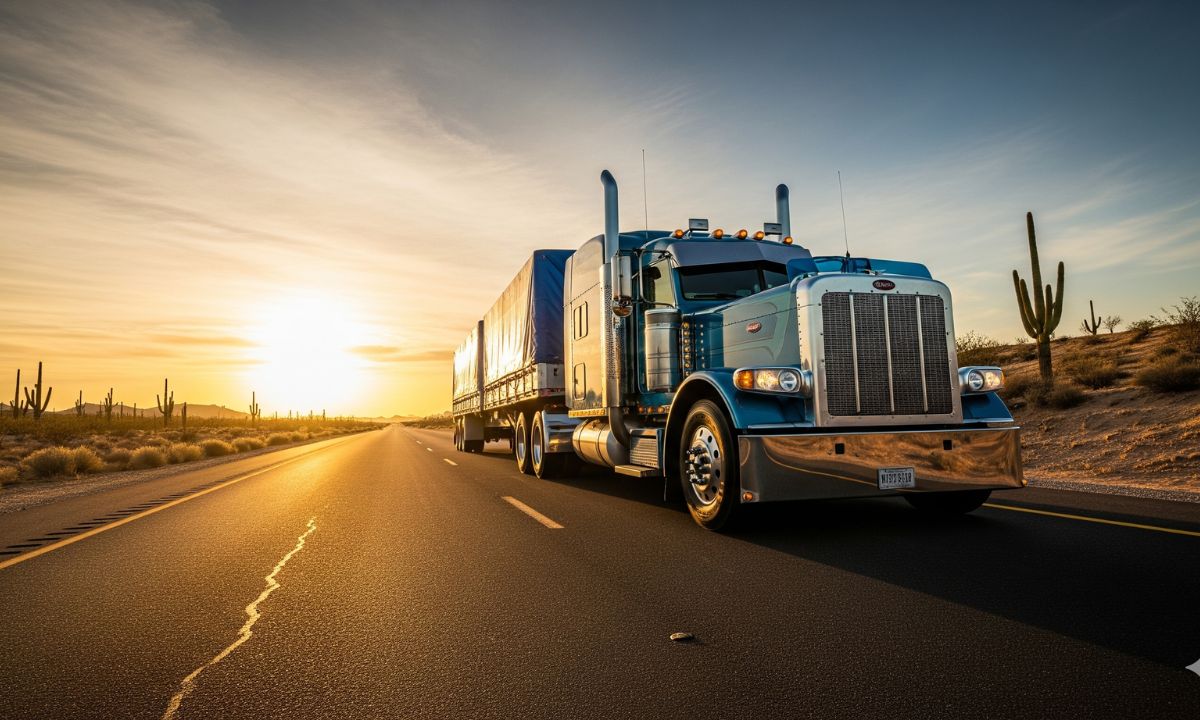
State-by-State CDL Requirements Explained for New Truckers
Becoming a commercial truck driver in the United States requires navigating both federal CDL standards and individual state licensing procedures. While the Federal Motor Carrier Safety Administration (FMCSA) sets baseline requirements, your state’s DMV or equivalent driver licensing agency issues your CDL and manages testing, fees, and endorsements.
Understanding the Federal CDL Framework
Before diving into state details, it helps to know the federal baseline:
- CDL Classes
- Class A – Required for combination vehicles with a gross combination weight rating (GCWR) of 26,001 pounds or more, where the towed unit exceeds 10,000 pounds (e.g., tractor-trailers).
- Class B – For single vehicles with a GCWR over 26,001 pounds or towing a unit not exceeding 10,000 pounds (e.g., delivery truck, bus).
- Class C – For vehicles that transport 16 or more passengers (including the driver) or hazardous materials requiring placarding.
- Endorsements
Federal endorsements (e.g., HazMat, Passenger, Tanker, Double/Triple) allow CDL holders to operate specialized equipment or carry certain loads. - Age Requirements
- 21+ to drive interstate commerce.
- Some states allow intrastate CDL at 18+ with state restrictions.
- Disqualifications & Medical Fitness
Federal rules govern serious violations—such as DUI or disqualification for hazardous materials—plus medical certification based on DOT physical exams.
These federal standards serve as a foundation; states add their own application processes, documentation requirements, fees, and testing protocols.
State-by-State CDL Requirements – Quick Notes for New Truckers
Alabama – CLP required for at least 14 days; HazMat requires TSA background check.
Alaska – Follows federal CDL rules; fewer testing locations due to geography.
Arizona – ELDT mandatory; appointments fill quickly in metro areas.
Arkansas – Commercial skills testing required at state-approved locations.
California – Strict enforcement of ELDT and medical certification; higher fees.
Colorado – Mountain driving knowledge emphasized in skills testing.
Connecticut – Separate CDL manual; additional knowledge tests for endorsements.
Delaware – Limited CDL testing centers; advance scheduling recommended.
Florida – Drug and alcohol compliance strictly enforced; proof of residency required.
Georgia – Appointment-only CDL testing; endorsements require extra written exams.
Hawaii – County-based CDL issuance; limited testing availability.
Idaho – Known for efficient CDL processing; ELDT required for new drivers.
Illinois – ELDT required before CLP issuance; multiple DMV visits common.
Indiana – Centralized CDL testing; skills tests often scheduled weeks ahead.
Iowa – State-approved third-party testers available.
Kansas – Written and road tests required; ELDT compliance verified.
Kentucky – Online scheduling available; strong focus on medical compliance.
Louisiana – CDL services managed through Express Lane; endorsements handled separately.
Maine – Weather conditions may impact road test scheduling.
Maryland – Federal and state background checks enforced for HazMat.
Massachusetts – Appointment-based CDL services; stricter road test standards.
Michigan – Separate CDL knowledge exams; ELDT verification required.
Minnesota – Strong emphasis on safety records and medical certification.
Mississippi – Standard CDL process; fewer testing locations in rural areas.
Missouri – CDL testing handled through Department of Revenue; ELDT mandatory.
Montana – Allows third-party testing; rural-friendly scheduling.
Nebraska – CDL testing often coordinated through DMV field offices.
Nevada – Skills tests in select locations; early booking advised.
New Hampshire – Smaller testing volume; faster turnaround times.
New Jersey – Multiple visits required; strict documentation checks.
New Mexico – CDL managed by MVD; ELDT enforced statewide.
New York – Multi-step application process; road test appointments limited.
North Carolina – CDL knowledge tests offered at select DMV offices only.
North Dakota – Fewer applicants; generally faster CDL processing.
Ohio – Separate CDL testing facilities; strong compliance enforcement.
Oklahoma – CDL services under DPS; endorsements require extra exams.
Oregon – Appointment-based CDL testing; ELDT required.
Pennsylvania – Extensive CDL manual; third-party testing available.
Rhode Island – Limited CDL testing capacity; early scheduling important.
South Carolina – First-time CDL applicants must complete ELDT before skills test.
South Dakota – Straightforward CDL process; fewer delays due to lower volume.
Tennessee – CDL skills tests scheduled through approved examiners.
Texas – Large backlog in metro areas; schedule skills test early.
Utah – Centralized CDL testing; strong emphasis on medical cards.
Vermont – Smaller applicant pool; quicker testing availability.
Virginia – Community college CDL programs widely accepted.
Washington – Environmental and tanker regulations closely monitored.
West Virginia – CDL process similar to federal baseline; fewer testing sites.
Wisconsin – CDL issuance integrated with DOT; ELDT mandatory.
Wyoming – Low volume allows faster CDL processing; rural-friendly testing.
Common Themes Across States
While each state varies, the following elements are universal:
1. Learner’s Permit (CLP) Requirement
Almost all states require new truckers to hold a Class A/B/C Learner’s Permit (CLP) for a minimum period (often 14 days) before the road test.
2. Entry-Level Driver Training (ELDT)
As required by FMCSA, training from an accredited provider is mandatory before taking the CDL skills test.
3. Medical Certification
All applicants must pass a DOT physical exam and acquire a Medical Examiner’s Certificate (MEC) before final CDL issuance.
4. Background Checks for Endorsements
Security-sensitive endorsements such as HazMat (H) require federal background checks and TSA approval, which can take several weeks.
5. Documentation
Common required documents include:
- Proof of identity and legal status
- Proof of state residency
- Social Security number verification
- Medical certificate
Missing documentation is a major cause of test delays.
Tips to Expedite Your CDL Process
To help new truckers avoid expensive delays:
- Prepare documentation early. Make sure your residency, identity, and medical certificates are complete before applying.
- Complete ELDT proactively. Don’t wait until after your written test.
- Schedule tests in advance. Many states have limited testing slots, particularly for the skills exam.
- Understand fees. Application, testing, endorsements, and renewals all carry separate fees.
- Plan for HazMat background checks. These can take up to 90 days in some cases.
Conclusion
Earning your CDL is a process with both federal standards and state-specific requirements. While there is consistency across the country—particularly with CLP waiting periods, medical certification, and ELDT—each state’s DMV has unique application steps, fees, scheduling protocols, and endorsement procedures. Understanding these differences can save time, reduce frustration, and ensure a smoother path toward your commercial driving career.
If you are preparing to apply for your CDL, start by researching your specific state’s DMV website and build a compliance checklist to track your progress. With the right preparation, you’ll be on the road to your trucking career sooner than you expect.